
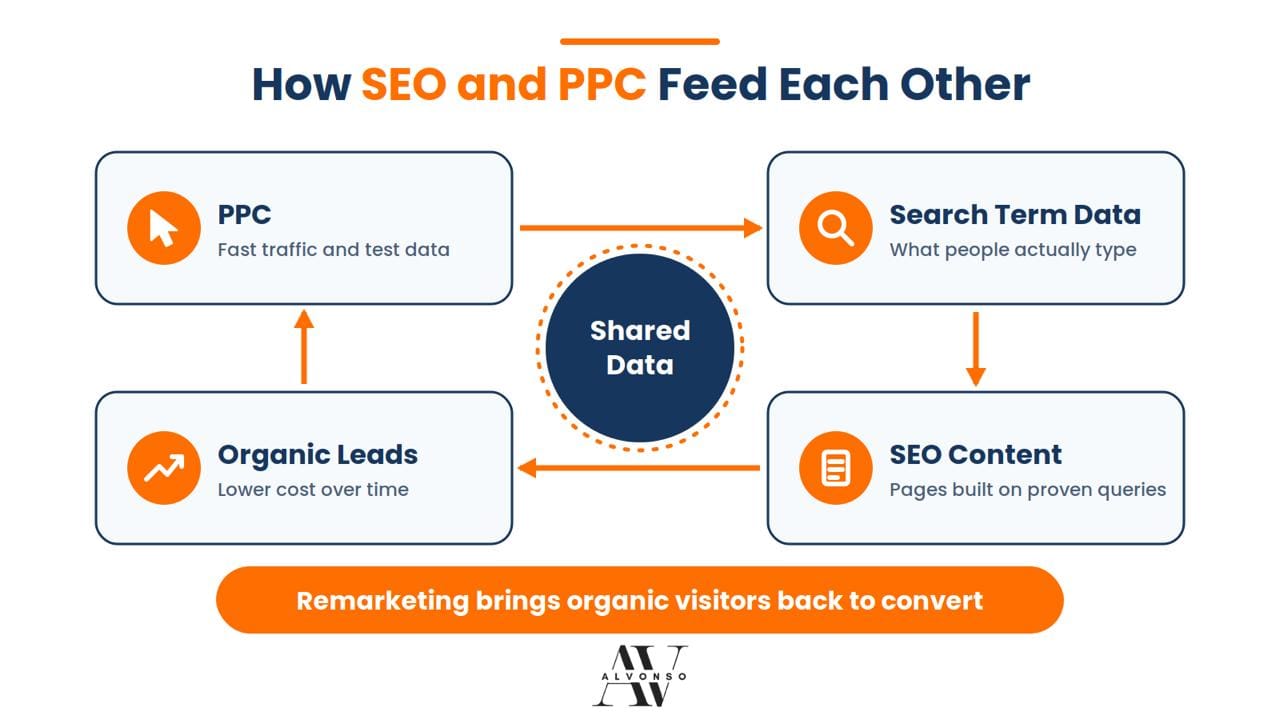
SEO and PPC work best together when each feeds the other. PPC gives you fast, measurable data on which keywords, headlines, and landing pages convert. SEO uses those findings to build content that keeps earning traffic without paying per click. The practical approach is to launch PPC on your highest-intent services, use the search term data to guide SEO content, and shift budget toward organic as your cost per lead falls. For a plan built around your business, request a free SEO and PPC strategy quote from Alvonso Marketing.
If you searched for “SEO and PPC together” and want to know exactly how to connect the two, this guide shows seven specific tactics, a keyword allocation framework, a 90-day plan, and the metrics that prove it works.
Yes, but not in the way many people assume. Paid ads do not push your organic listings higher, and search engines do not reward you for advertising. What happens instead is that the two channels share information and cover each other’s weaknesses. PPC is fast and precise but stops when the budget stops. SEO is slow to start but keeps working once pages rank. Used together, they close each other’s gaps. Strong digital marketing services treat them as one plan.
If you are still deciding which one deserves your first dollar, our breakdown of SEO vs paid ads compares the two head to head. This guide starts where that one ends: you already know both matters, and you want them to work as one system rather than two separate budgets.
Every paid campaign produces a search terms report: the exact phrases people typed before clicking your ad. That is real demand data you did not have to guess at. Look for queries that convert at a good cost, then check whether you have organic content for them. Terms that keep producing leads are strong candidates for dedicated pages or blog posts, which is one of the fastest ways our SEO services move from guesswork to evidence.
Ad platforms let you test several headlines and descriptions in days. The versions that earn the highest click-through rate reveal what your audience responds to. You can then apply those angles to page titles and meta descriptions, where testing is far slower. Treat the ad account as a fast research lab for your organic copy.
A new service page or a new location can take months to rank. During that time, a small targeted campaign can capture demand for that service immediately. As the organic page climbs, you can reduce or pause the paid spend on that term and redirect it elsewhere. This is the practical version of “bridge the gap” and the reason many businesses start with PPC management while SEO builds in the background.
Showing up in the paid and organic results for the same search can strengthen your presence, but it is not always worth paying for. Branded searches are a common example: if you already rank first organically and no competitor is bidding on your name, paid clicks may add little. If competitors do bid on your brand, protecting it with a low-cost ad often makes sense. For high-value non-branded terms, test with and without ads and compare total leads, not just clicks.
Most visitors from search do not convert on their first visit. Remarketing ads let you reach people who already read your content or viewed a service page and remind them to come back. SEO earns the visit, and PPC helps finish the sale. Build audiences by page type, such as pricing page visitors or cart abandoners, so the message matches where they stopped.
Paid traffic exposes landing page problems quickly because you pay for every visit that does not convert. If a page performs well for ads, its structure, offer, and calls to action are worth applying to organic pages. If an organic page converts well, consider sending ad traffic to it. Both teams benefit from a single, shared view of what persuades visitors.
Integration only works if everyone looks at the same numbers. Connect Google Ads, Search Console, and analytics so you can see how paid and organic sessions behave on the same pages. Add call and form tracking so leads are attributed properly. Our guide to what a marketing agency in New York does shows how reporting fits into a coordinated program.
The flow of information works in both directions. While PPC feeds SEO with fast keyword and messaging data, your organic performance can sharpen paid campaigns just as much. Search Console shows which queries already bring you impressions and clicks, and that is a useful starting list for ad groups you may have missed. Pages that rank and convert well are also strong candidates for ad landing pages, because they already match what searchers want.
Seasonal patterns in organic traffic help you plan when to raise or lower bids, and content gaps found during SEO research can reveal new services worth advertising. When both teams share these findings each month, the account gets steadily more efficient. Our search marketing services are built around that two-way exchange.
Not every keyword deserves both channels. A simple allocation framework keeps spending sensible and avoids paying for clicks you would get anyway.
| Keyword Type | Example | Best Channel | Why |
|---|---|---|---|
| Urgent, high-intent | “emergency plumber near me” | PPC first, plus local SEO | Customers need help now and organic rankings take too long |
| Informational | “how much does a roof repair cost” | SEO content | Builds trust and traffic at low cost per visit |
| Local “near me” | “dentist in Astoria” | Local SEO, with ads where competition is high | Map visibility drives calls |
| Branded | Your business name | Organic, with ads if competitors bid | Protects brand clicks without overspending |
| Competitor terms | A rival’s name | PPC only, tested carefully | Hard to rank organically, easy to test with ads |
| Seasonal or promotional | “holiday gift sets” | PPC | Short windows do not suit slow SEO |
| Low-competition long-tail | “best accountant for freelancers in Brooklyn” | SEO | Cheap to rank for and highly specific |
| Proven converters | Terms with a strong PPC conversion rate | Both | Worth building organic assets around |
The flow of information works in both directions. While PPC feeds SEO with fast keyword and messaging data, your organic performance can sharpen paid campaigns just as much. Search Console shows which queries already bring you impressions and clicks, and that is a useful starting list for ad groups you may have missed. Pages that rank and convert well are also strong candidates for ad landing pages, because they already match what searchers want.
Seasonal patterns in organic traffic help you plan when to raise or lower bids, and content gaps found during SEO research can reveal new services worth advertising. When both teams share these findings each month, the account gets steadily more efficient. Our search marketing services are built around that two-way exchange.
